
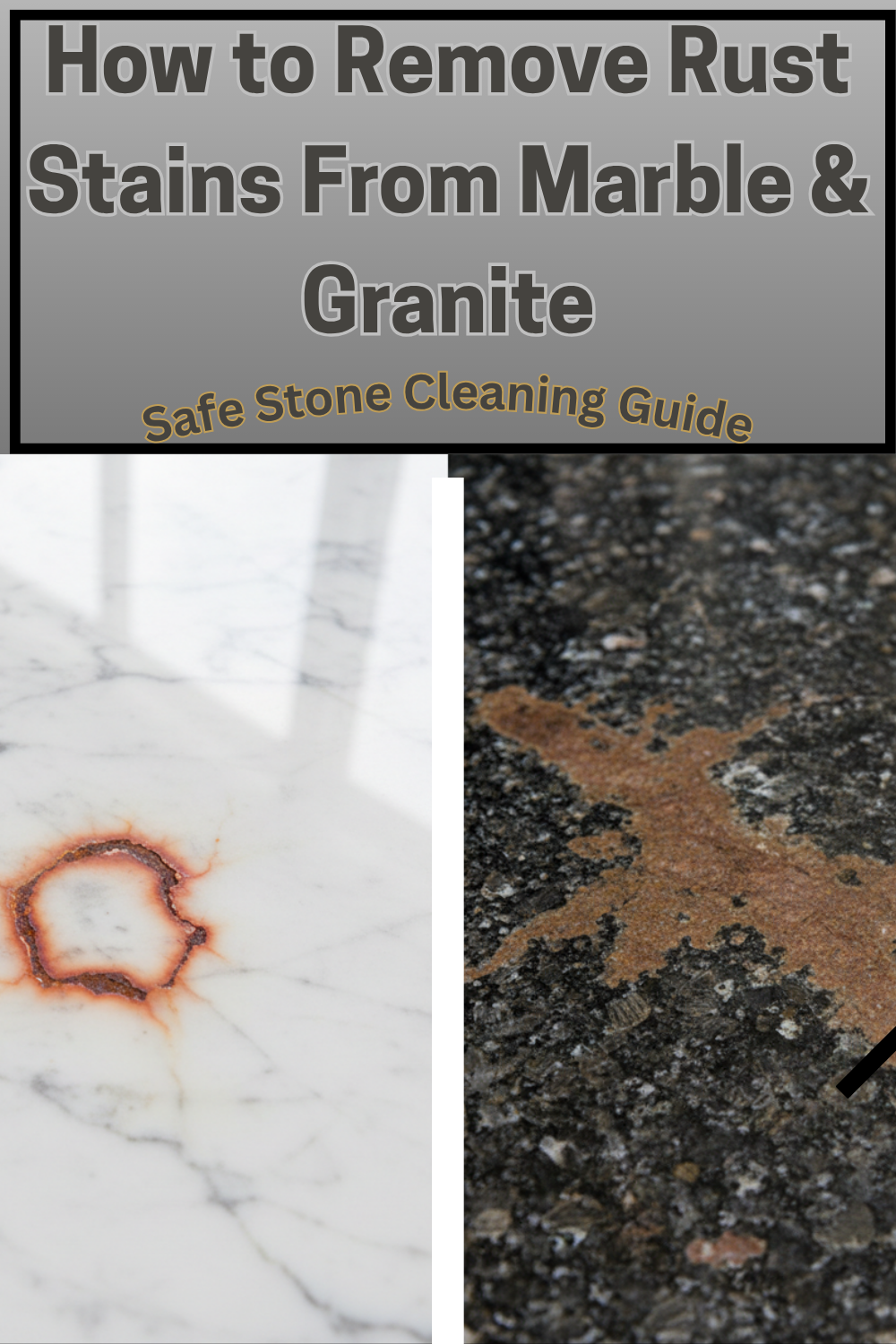
Rust stains on granite and marble are one of the most alarming things a stone owner can discover — an orange or brown discoloration that seems to come from nowhere and won't wipe away. The good news is that rust stains are treatable. The key is understanding what causes them and using the right product to draw the iron out of the stone.
This guide covers everything you need to know — what causes rust stains on natural stone, how to identify them, and exactly how to remove them using Lustro Italiano rust removal products.
What Causes Rust Stains on Granite and Marble?
Rust stains on natural stone are caused by iron oxidation. When iron-containing materials come into contact with stone — or when iron minerals naturally present in the stone itself are exposed to moisture and oxygen — they oxidize and leave behind orange, brown, or reddish discoloration.
Common causes of rust stains on stone:
- Metal objects left on the stone surface — cans, pots, tools, plant pots with metal bases
- Iron-rich water (well water) repeatedly contacting the stone
- Metal fasteners, brackets, or fixtures near or embedded in the stone
- Natural iron deposits within the stone itself, activated by moisture
- Steel wool or metal scrubbing pads used during cleaning
- Fertilizers containing iron left on stone surfaces
Important: Rust stains are not surface damage — they are iron deposits absorbed into the pores of the stone. Scrubbing the surface will not remove them. You need a chemical rust remover that reacts with the iron and draws it out of the stone.
How to Identify a Rust Stain on Stone
Rust stains are typically:
- Orange, brown, or reddish in color — matching the color of oxidized iron
- Ring-shaped or irregular — often matching the shape of a metal object that sat on the surface
- Smooth in texture — the stone surface feels normal; the discoloration is inside the pores, not on the surface
- Resistant to cleaning — regular stone cleaners and water will not remove them
- Gradual in appearance — rust stains often develop slowly as iron oxidizes over time
Not sure if you have a rust stain or another type of stain? Read our full guide: How to Remove Stains from Stone — The Complete Identification & Removal Guide →
What You Need to Remove Rust Stains from Stone
Rust stains require a chemical rust remover — a product that reacts with the iron deposits in the stone and breaks them down so they can be removed. Lustro Italiano makes purpose-built rust removal products for natural stone:
Lustro Italiano Rust Remover Powder
A concentrated rust-removing powder formulated specifically for granite, marble, travertine, limestone, and other natural stone surfaces. Mixed with water to form a poultice, it penetrates the stone pores, reacts with the iron deposits, and draws the rust out as it dries. The go-to product for spot rust stain removal on any natural stone surface.
Lustro Italiano Marble Rust Remover & Restoration Kit
A complete rust removal and marble restoration kit — includes the rust remover plus a polish restorer and stone sealer. The best option when you want to remove the rust stain, restore the marble's polish, and reseal the surface in one complete treatment.
Lustro Italiano Marble Rust & Etch Remover Maintenance Kit
Combines rust removal and etch mark removal in a single maintenance kit — ideal when your marble has both rust staining and acid etching, or as a periodic maintenance treatment to keep marble looking its best.
How to Remove Rust Stains from Granite and Marble — Step by Step
What You'll Need
- Lustro Italiano Rust Remover Powder
- Water
- Clean mixing container
- Plastic wrap
- Soft cloths or sponge
- Plastic scraper or spatula
Step 1 — Clean the Surface
Clean the stained area with a pH-neutral stone cleaner and allow it to dry completely. Use the Lustro Italiano Natural Stone Cleaner — avoid acidic or alkaline cleaners that can damage the stone or interfere with the rust remover.
Step 2 — Mix the Rust Remover Poultice
Mix the Lustro Italiano Rust Remover Powder with water in a clean container to form a thick paste — roughly the consistency of peanut butter. Mix thoroughly until smooth with no dry powder remaining.
Step 3 — Apply the Poultice
Apply the poultice paste directly over the rust stain in an even layer approximately 1/4" to 1/2" thick. Extend the poultice slightly beyond the edges of the stain to ensure full coverage.
Step 4 — Cover with Plastic Wrap
Cover the poultice with plastic wrap and tape the edges down to slow the drying process. Puncture a few small holes in the plastic to allow gradual evaporation. Slow drying is critical — it gives the poultice time to draw the iron out of the stone pores.
Step 5 — Allow to Dry Completely (24–48 Hours)
Leave the poultice in place for 24–48 hours until it has dried completely. Do not disturb it during this time. For deep or old rust stains, allow the full 48 hours.
Step 6 — Remove the Dried Poultice
Once fully dry, remove the plastic wrap and use a plastic scraper to lift the dried poultice off the stone. Do not use metal scrapers — they can scratch the surface. The rust deposits will have been drawn into the poultice as it dried.
Step 7 — Rinse and Inspect
Rinse the area thoroughly with clean water and dry with a soft cloth. Inspect the stain. For light rust stains, one application is usually sufficient. For deep or old stains, repeat the process 2–3 times until the stain is fully removed.
Step 8 — Restore and Seal
After rust removal, restore the stone's polish and seal the surface to prevent future staining. The Lustro Italiano Marble Rust Remover & Restoration Kit includes everything needed for this final step. Alternatively, use the Lustro Italiano Stone Sealer separately.
Rust Stain Removal Tips
- Don't rush the drying time — the poultice works by drawing iron out as it dries; removing it too early will reduce effectiveness
- Repeat for deep stains — old or deep rust stains may require 2–3 applications; each treatment removes more iron from the stone pores
- Never use acidic rust removers on marble — acid-based rust removers designed for metal or grout will etch and permanently damage marble, limestone, and travertine; always use a stone-safe product like Lustro Italiano
- Test in an inconspicuous area first — especially on polished or unusual stone finishes
- Seal after treatment — a properly sealed stone surface resists future staining significantly better than unsealed stone
Preventing Rust Stains on Natural Stone
- Use rubber or felt pads under metal objects — cans, pots, tools, plant containers
- Never leave wet metal objects on stone surfaces
- Avoid steel wool or metal scrubbing pads on stone
- If you have iron-rich well water, consider a water softener or filter for areas with stone surfaces
- Seal your stone regularly — a good impregnating sealer slows the absorption of iron-containing liquids
- Wipe up water spills promptly, especially near metal fixtures or fittings
Frequently Asked Questions
Can I remove rust stains from marble myself?
Yes. Most rust stains on marble can be removed at home using a stone-safe rust remover poultice like the Lustro Italiano Rust Remover Powder. Deep or very old stains may require multiple applications or professional treatment.
Will regular rust remover work on marble?
No. Standard rust removers (designed for metal, grout, or tile) are typically acid-based and will permanently etch and damage marble, limestone, and travertine. Always use a stone-safe rust remover specifically formulated for natural stone.
How long does it take to remove a rust stain from stone?
The poultice application takes a few minutes, but the drying time is 24–48 hours. Plan for at least one full day per treatment, with possible repeat applications for deep stains.
Why does my granite have rust stains with no metal nearby?
Some granite contains natural iron mineral deposits. When moisture penetrates the stone, it can activate these deposits and cause rust staining from within. This is more common in unsealed or under-sealed granite. Sealing the stone helps prevent moisture from reaching the iron minerals.
Can rust stains be removed from travertine and limestone?
Yes. The Lustro Italiano Rust Remover Powder works on marble, granite, travertine, limestone, and other natural stone surfaces.
What's the difference between a rust stain and an etch mark on marble?
A rust stain is orange/brown discoloration from iron absorbed into the stone pores — the surface texture feels normal. An etch mark is surface damage from acid contact — the surface feels dull or rough. They require different treatments. Read our guide: How to Remove Etch Marks from Marble →
Shop Lustro Italiano Rust Removal Products
- Lustro Italiano Rust Remover Powder →
- Lustro Italiano Marble Rust Remover & Restoration Kit →
- Lustro Italiano Marble Rust & Etch Remover Maintenance Kit →
- Lustro Italiano Stone Sealer →
- Lustro Italiano Natural Stone Cleaner →
Pro Tool Haus is an authorized distributor of Lustro Italiano stone care products.