
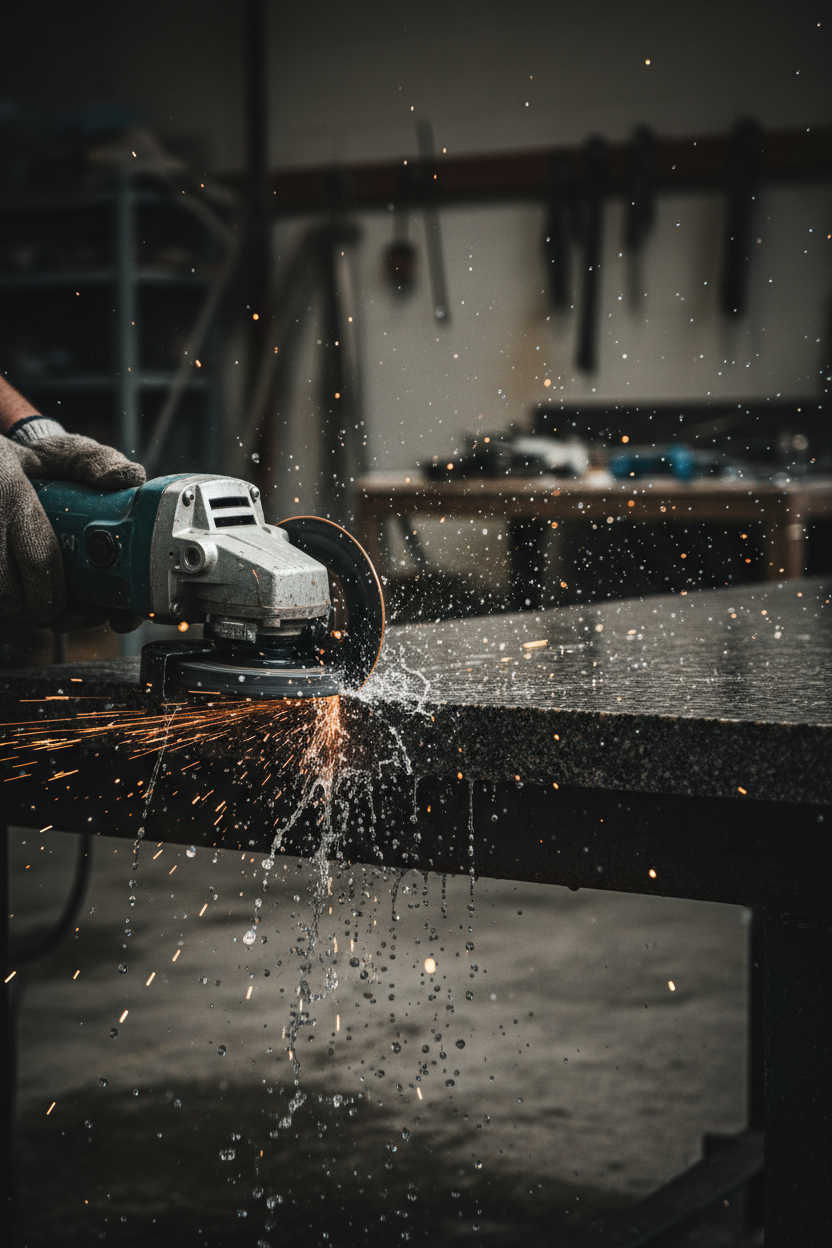
Can I use an angle grinder to cut granite?
Yes — an angle grinder can cut granite effectively when fitted with the correct diamond blade. It's one of the most common tools in stone fabrication shops for straight cuts, sink cutouts, edge profiling, and field repairs. However, using the wrong blade, wrong technique, or skipping dust control will result in chipped stone, blade damage, or serious health hazards.
What kind of blade do I need to cut granite with an angle grinder?
You need a diamond blade — standard abrasive blades will not cut granite and will shatter on contact. Not all diamond blades are equal; the blade type must match the material:
- Turbo rim blades — the standard choice for granite and natural stone. The segmented turbo pattern provides fast cutting with good chip control. The Chingon Premium Side Diamond Turbo Blade is purpose-built for granite, quartzite, and hard natural stone.
- Continuous rim blades — slower cut but cleaner edge; preferred for marble and softer stone where chipping is a concern.
- Double-sided blades — like the Weha 5" Duo Diamond Blade — designed for marble and quartz where edge quality matters more than cut speed.
- Ultra-thin continuous rim — required for porcelain slab; the Mastercut 2" Diamond Blade is the right tool for porcelain and ceramic tile work.
Never use a granite blade on porcelain — the wrong blade will chip the surface and damage the blade.
What size angle grinder do I need?
The most common sizes for stone fabrication are 4.5" and 5" grinders. These are the standard for sink cutouts, edge work, and straight cuts on countertop slabs. Larger 7" grinders are used for heavy material removal but are less maneuverable for detail work.
Match your blade diameter to your grinder's arbor size and maximum RPM rating — never run a blade beyond its rated RPM.
Wet or dry cutting — which is better for granite?
Wet cutting is strongly preferred for granite and all natural stone:
- Water suppresses respirable silica dust at the point of cut — a critical OSHA requirement (29 CFR 1926.1153)
- Keeps the blade cool, extending blade life significantly
- Produces a cleaner cut with less chipping
Dry cutting is possible with blades rated for dry use, but generates significant silica dust. If cutting dry, full respiratory PPE (N95 minimum, P100 preferred) and local exhaust ventilation are required. See our OSHA Silica Dust Compliance Guide for full requirements.
What cuts can an angle grinder make on granite?
An angle grinder is well-suited for:
- Straight cuts — with a guide rail or straight edge clamped to the slab
- Sink cutouts — plunge cuts on straight sections; corners completed with a jigsaw or pivot technique. See our full Sink Cutout Guide
- Edge profiling — with profile wheels or cup wheels
- Field repairs and scribing — trimming installed countertops to fit walls or obstacles
- Grinding and surface prep — removing high spots, adhesive, or old material
An angle grinder is not the right tool for:
- Long, precision straight cuts on full slabs — use a bridge saw or track saw for these
- Tight radius curves — a jigsaw with a diamond blade handles corners better
- CNC-quality edge profiles — requires dedicated profile tooling
What technique should I use?
- Support the cutout section before making the final cut — unsupported pieces drop and crack the slab
- Never plunge straight in at a corner — always start on a straight section and stop 1" before corners
- Let the blade do the work — excessive pressure causes blade glazing and overheating
- Keep water flowing — for wet cutting, maintain consistent water flow at the cut line throughout
- Use a straight edge guide — clamp a metal straight edge to the slab for accurate straight cuts; freehand cutting on expensive stone is a high-risk move
Common mistakes to avoid
- Using the wrong blade for the material — granite blade on porcelain = chipped surface and ruined blade
- Dry cutting without dust control — silica exposure is cumulative and irreversible; don't skip PPE
- Cutting without supporting the drop piece — the cutout will crack the slab as it falls
- Running a blade past its RPM rating — blade failure at speed is dangerous
- Skipping the water — even a few seconds of dry running on a wet-rated blade causes heat damage
Recommended blades for angle grinder stone cutting
- Chingon Premium Side Diamond Turbo Blade — granite, quartzite, hard natural stone
- Weha 5" Duo Diamond Blade — marble and quartz
- Mastercut 2" Diamond Blade — porcelain and ceramic tile