
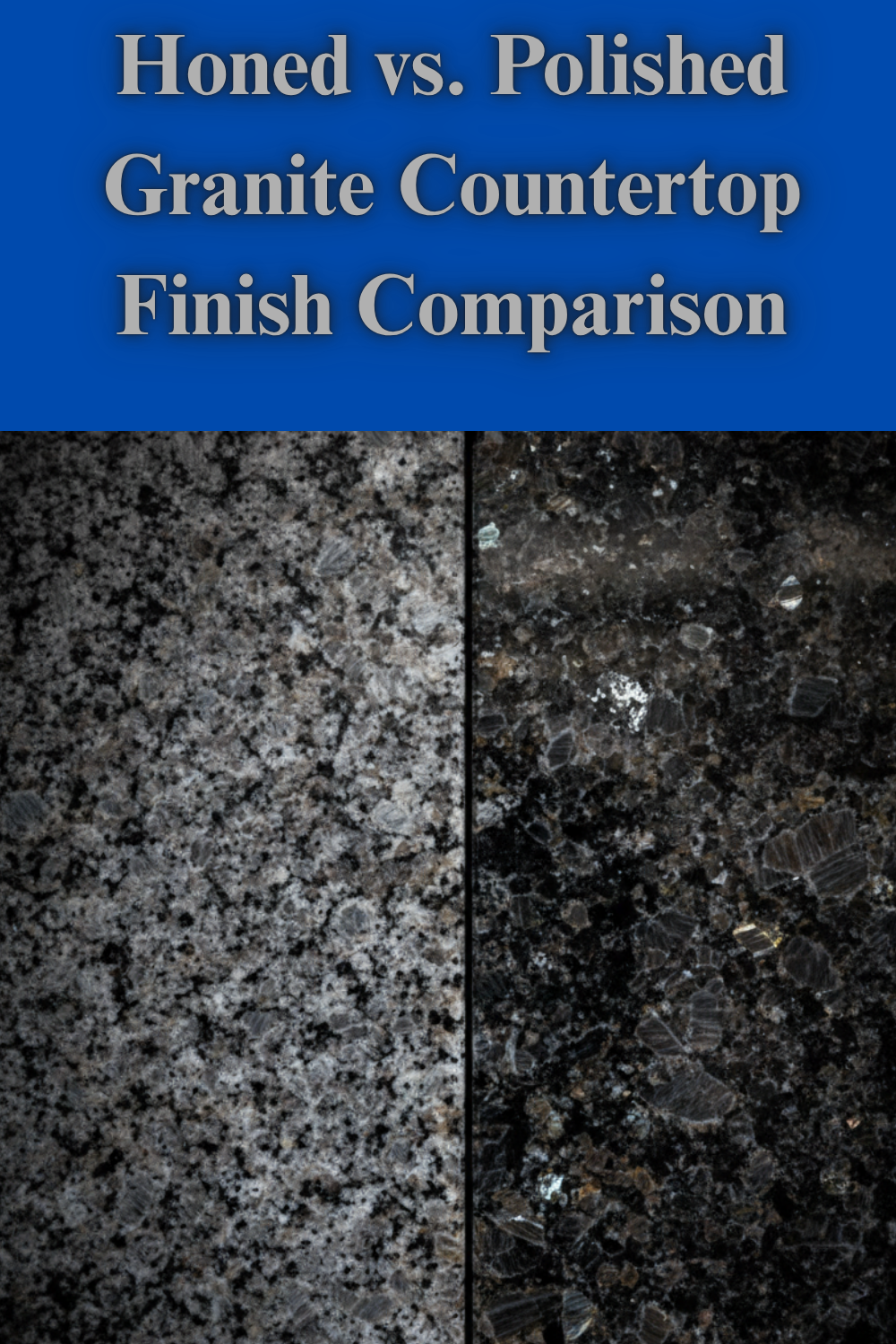
What's the difference between honing and polishing stone?
Honing and polishing are both finishing processes for stone, but they produce very different results:
- Honing produces a matte to satin finish — smooth to the touch, with no reflectivity. The stone surface is flat and scratch-free but does not reflect light.
- Polishing produces a glossy, reflective finish — the stone surface reflects light clearly, showing depth, color, and grain at maximum intensity.
Both are achieved using the same diamond polishing pads in sequence — the difference is simply where you stop.
What grit range produces a honed finish vs. a polished finish?
| Finish | Grit Range | Appearance |
|---|---|---|
| Coarse hone | 50–200 grit | Flat, matte, visible micro-scratches |
| Standard hone | 400 grit | Smooth, satin, no visible scratches |
| Semi-polish | 800 grit | Low sheen, slight reflection |
| Polish | 1500–3000 grit | High gloss, mirror-like reflection |
A 400-grit stop is the industry standard for a honed countertop finish. A 3000-grit finish is the standard polished countertop delivered to customers.
Which is better — honed or polished?
Neither is objectively better. The right choice depends on the stone type, the application, and the customer's preference:
Honed is often preferred for:
- Marble countertops — honed marble shows etch marks less visibly than polished marble (etches appear as dull spots on a polished surface, which are harder to see on an already-matte honed surface)
- High-traffic floors — honed finishes are less slippery when wet
- Contemporary and minimalist design aesthetics
- Outdoor stone — polished finishes weather and lose gloss faster outdoors
Polished is often preferred for:
- Granite countertops — polished granite is more stain-resistant because the surface is denser and less porous at the finish level
- Showroom and luxury installations — maximum color depth and visual impact
- Dark stones — polished black granite, nero marquina marble, and similar dark stones show their full color and veining only when polished
- Quartz countertops — most engineered quartz is factory-polished; matching that finish requires polishing to 3000 grit
Can a honed surface be polished later?
Yes — a honed stone can be polished by continuing the grit sequence from 400 through 3000. This is a common field service for customers who want to upgrade their finish.
The reverse is also possible: a polished surface can be honed by starting back at a lower grit (typically 200–400) and stopping at 400. This is sometimes done intentionally for design reasons or to remove deep scratches that can't be buffed out at higher grits.
Does the finish affect sealing requirements?
Yes — finish affects porosity at the surface level:
- Polished stone is slightly less porous at the surface because the polishing process closes micro-pores. It still requires sealing, but may absorb sealer more slowly.
- Honed stone is more porous at the surface and typically requires more frequent sealing — especially marble, limestone, and travertine in honed finish.
Always perform the water bead test after installation to confirm sealer coverage regardless of finish.
Does the process differ for different stone types?
The grit sequence is the same, but the behavior varies by material:
- Granite — polishes readily; holds a high gloss well; honed granite is durable but shows fingerprints more than polished
- Marble — softer; reaches a high polish quickly but scratches and etches more easily; honed is often the practical choice for kitchens
- Quartzite — harder than marble, closer to granite; polishes well but requires more passes at each grit
- Quartz (engineered) — factory-polished to a consistent finish; field polishing to match requires 3000 grit and a buff pad
- Porcelain slab — vitrified surface; requires specialty porcelain polishing pads; standard granite pads will not achieve the same result
Recommended products
For a full 7-step sequence (hone through polish):
- Weha 5" Schein 7-Step Polishing Pads — complete grit set, wet use
For a fast 3-step system:
For maximum final gloss after 3000 grit: