
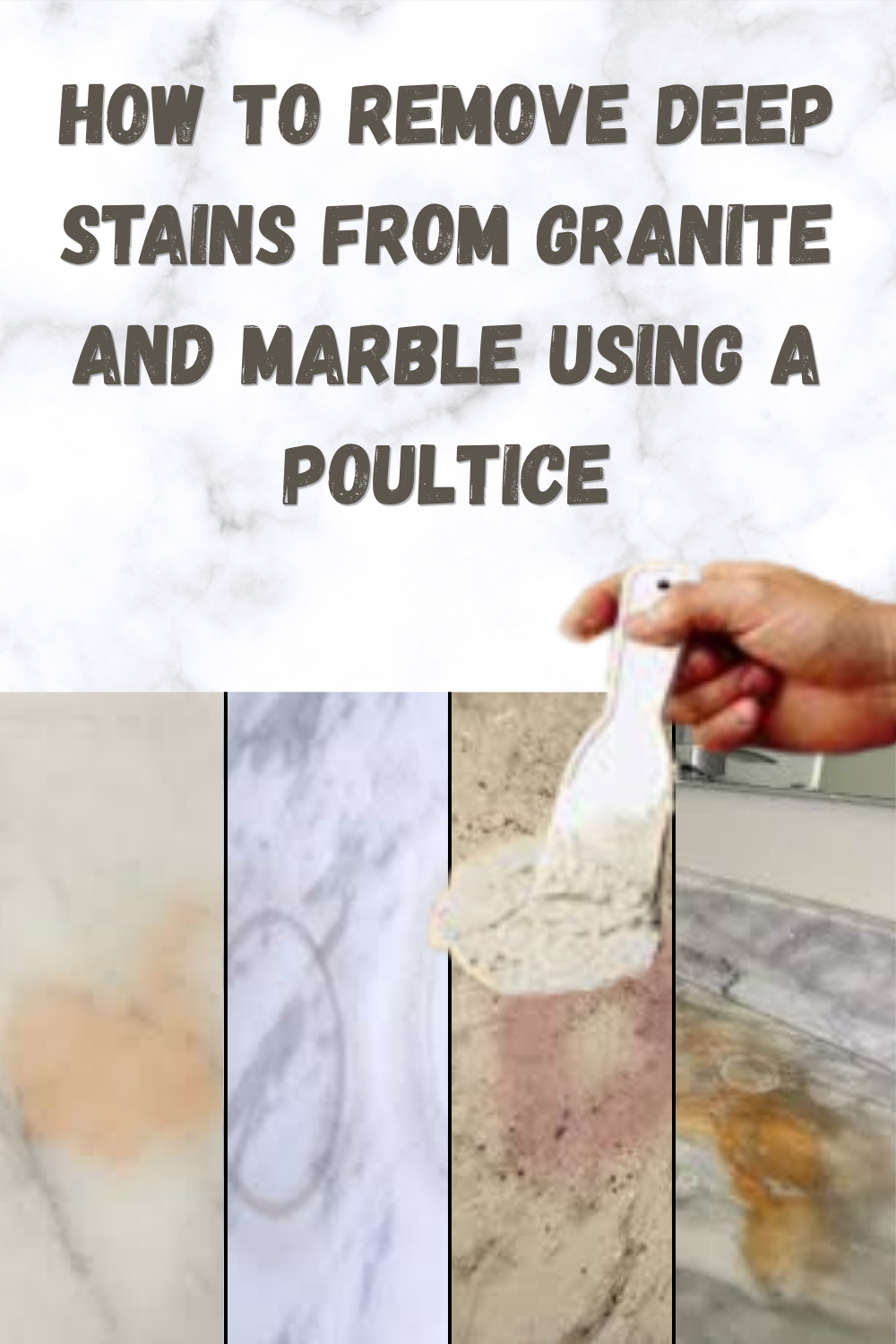
Some stains on granite and marble wipe right off. Others don't — because they've soaked into the pores of the stone and can't be removed from the surface alone. These are deep stains, and they require a completely different approach: the poultice method.
A poultice draws the stain out of the stone from the inside, rather than trying to scrub it off the surface. It's the professional standard for removing oil, grease, wine, coffee, and organic stains from natural stone — and it works on granite, marble, travertine, limestone, and most other porous stone surfaces.
This guide explains how the poultice method works and walks you through the complete removal process using Lustro Italiano stain remover products.
What Is a Poultice and How Does It Work?
A poultice is a paste — typically a powder mixed with water or a chemical agent — that is applied over a stain, covered, and left to dry slowly. As the poultice dries, it creates a drawing action that pulls the staining substance up and out of the stone's pores and into the poultice material itself. When the dried poultice is removed, the stain comes with it.
The key to the poultice method is slow drying. Covering the poultice with plastic wrap slows evaporation, giving the drawing action more time to work. Removing the poultice too early significantly reduces effectiveness.
Poultices work best on absorption-based stains — substances that have soaked into the stone's pores. They are not effective on etch marks (surface damage from acid) or rust stains (which require a chelate-based rust remover).
Not sure what type of stain you have? Read our guide: Etch Mark vs. Stain — How to Tell the Difference and Fix Both →
What Stains Can a Poultice Remove?
The poultice method is effective on:
- Oil and grease stains — cooking oil, butter, salad dressing, hand lotion, cosmetics
- Organic stains — wine, coffee, tea, fruit juice, food coloring
- Biological stains — mold, mildew, algae (on outdoor stone)
- Ink and dye stains — marker, pen, hair dye
- Dark water stains — mineral deposits from hard water absorbed into the stone
The poultice method is not effective on:
- Etch marks (acid damage to the stone surface) — see our etch mark removal guide
- Rust stains (iron oxidation) — see our rust stain removal guide
- Surface scratches or physical damage
Lustro Italiano Stain Remover Products
Lustro Italiano Stain Remover Poultice Powder
A professional-grade poultice powder formulated to draw deep oil, grease, wine, coffee, and organic stains out of granite, marble, travertine, limestone, and other natural stone surfaces. Mixed with water to form a paste, applied over the stain, and left to dry for 24–48 hours. The stain is drawn into the poultice as it dries and removed with it. The go-to product for spot stain treatment on any natural stone surface.
Lustro Italiano Natural Stone Stain & Restore Kit
A complete stain removal and restoration kit for granite and natural stone — includes the stain remover poultice plus a stone polish and sealer to restore and protect the surface after treatment. The best option when you want to remove the stain and restore the stone's finish in one complete treatment.
Lustro Italiano Natural Stone Stain Remover & Restoration Kit
A more comprehensive restoration kit that includes stain removal, resealing, and surface maintenance products — ideal for stone that is overdue for a full treatment, or when the stain has been present for an extended period.
How to Remove Deep Stains from Stone Using a Poultice — Step by Step
What You'll Need
- Lustro Italiano Stain Remover Poultice Powder
- Water
- Clean mixing container
- Plastic wrap
- Tape
- Soft cloths or sponge
- Plastic scraper or spatula
Step 1 — Identify and Clean the Stain
Before applying the poultice, clean the surface with a pH-neutral stone cleaner to remove any surface residue. Use the Lustro Italiano Natural Stone Cleaner and allow the area to dry completely. Do not use acidic or alkaline cleaners — they can damage the stone or interfere with the poultice.
Step 2 — Mix the Poultice
Pour the Lustro Italiano Stain Remover Poultice Powder into a clean container and add water gradually, mixing until you achieve a thick paste — roughly the consistency of peanut butter or thick yogurt. The paste should hold its shape when applied but not be so dry it crumbles.
Step 3 — Apply the Poultice Over the Stain
Apply the poultice paste directly over the stained area in an even layer approximately ¼" to ½" thick. Extend the poultice slightly beyond the edges of the stain to ensure full coverage. For large stains, work in sections.
Step 4 — Cover with Plastic Wrap
Cover the poultice completely with plastic wrap and tape the edges down to create a seal. Puncture several small holes in the plastic with a toothpick or pin to allow slow, controlled evaporation. This is the critical step — slow drying maximizes the drawing action.
Step 5 — Wait 24–48 Hours
Leave the poultice undisturbed for 24–48 hours. For light or recent stains, 24 hours is usually sufficient. For deep, old, or oil-based stains, allow the full 48 hours. Do not remove the poultice early.
Step 6 — Remove the Dried Poultice
Once fully dry, remove the plastic wrap. Use a plastic scraper or spatula to lift the dried poultice off the stone — do not use metal scrapers, which can scratch the surface. The staining substance will have been drawn into the poultice material as it dried.
Step 7 — Rinse and Inspect
Rinse the area thoroughly with clean water and dry with a soft cloth. Inspect the stain under good lighting. For light stains, one application is usually sufficient. For deep or old stains, repeat the process — each application draws more of the stain out of the stone pores.
Step 8 — Restore and Seal
After stain removal, restore the stone's finish and reseal the surface. The Lustro Italiano Natural Stone Stain & Restore Kit includes everything needed for this step. A properly sealed stone surface will resist future staining significantly better than unsealed stone.
Poultice Tips for Best Results
- Don't rush the drying time — the drawing action happens during drying; removing the poultice too early dramatically reduces effectiveness
- Thicker is better — a paste that's too thin won't draw effectively; aim for peanut butter consistency
- Repeat for stubborn stains — old or deep stains may need 2–3 applications; each treatment removes more of the stain
- Work on a dry surface — excess moisture in the stone before application reduces the poultice's drawing capacity
- Test first — on unusual or antique stone finishes, test in an inconspicuous area before treating the full stain
- Seal after treatment — staining almost always indicates the stone's sealer has failed or was never applied; resealing after treatment is essential
How to Prevent Deep Stains on Natural Stone
- Seal your stone — a properly applied impregnating sealer is the single most effective stain prevention measure; reseal every 3–5 years on countertops
- Wipe spills immediately — even sealed stone will stain if spills are left to soak for extended periods
- Use coasters and trivets — under glasses, bottles, and cookware
- Use cutting boards — never prepare food directly on stone
- Use pH-neutral cleaners only — acidic or alkaline cleaners can degrade the sealer over time, leaving the stone vulnerable to staining
Frequently Asked Questions
How long does the poultice method take?
The application takes 10–15 minutes, but the poultice must remain on the stone for 24–48 hours to dry completely. Plan for at least one full day per treatment cycle.
How many applications will I need?
Light or recent stains often respond to a single application. Deep, old, or oil-based stains may require 2–3 applications. Allow the stone to dry fully between applications.
Will the poultice damage my stone?
No. The Lustro Italiano Stain Remover Poultice Powder is formulated specifically for natural stone and will not damage granite, marble, travertine, or limestone when used as directed.
Can I use the poultice on polished marble?
Yes. The poultice will not affect the polish on marble. After stain removal, clean the surface and reseal as normal.
What's the difference between a poultice and a regular stone cleaner?
A regular stone cleaner removes surface residue. A poultice draws staining substances out of the stone's pores — it works from the inside out. For stains that have penetrated below the surface, a cleaner alone will not be effective.
Do I need to reseal after using a poultice?
Yes. If your stone stained, it means the sealer has failed or was insufficient. After stain removal, reseal with the Lustro Italiano Stone Sealer to protect against future staining.
Can I use the poultice on granite?
Yes. The Lustro Italiano Stain Remover Poultice Powder works on granite, marble, travertine, limestone, and most other natural stone surfaces.
Shop Lustro Italiano Stain Removal Products
- Lustro Italiano Stain Remover Poultice Powder →
- Lustro Italiano Natural Stone Stain & Restore Kit →
- Lustro Italiano Natural Stone Stain Remover & Restoration Kit →
- Lustro Italiano Stone Sealer →
- Lustro Italiano Natural Stone Cleaner →
Pro Tool Haus is an authorized distributor of Lustro Italiano stone care products.