
Sealing is the single most effective thing you can do to protect granite, marble, and natural stone countertops from staining. But most homeowners either don't know when to reseal, wait too long, or skip it entirely — and then wonder why their stone keeps staining.
This guide covers everything you need to know: how stone sealers work, how to test whether your sealer has failed, how often different stone types need resealing, and exactly how to reseal your countertops using Lustro Italiano stone sealer products.
How Stone Sealers Work
Natural stone is porous. Granite, marble, travertine, and limestone all have microscopic pores that absorb liquids — including staining substances like oil, wine, coffee, and juice. An impregnating sealer penetrates these pores and fills them with a protective barrier that slows or prevents liquid absorption.
Important distinctions:
- Sealers prevent staining by blocking the pores — they do not prevent etching on marble (etching is a chemical reaction with the stone surface, not absorption)
- Sealers slow absorption — they don't make stone completely impervious; spills still need to be wiped up promptly
- Sealers wear down over time from cleaning, heat, and daily use — they need to be reapplied periodically
- A sealer is not a coating — a good impregnating sealer like Lustro Italiano Stone Sealer penetrates below the surface and doesn't change the stone's appearance or texture
How to Tell If Your Stone Needs Resealing
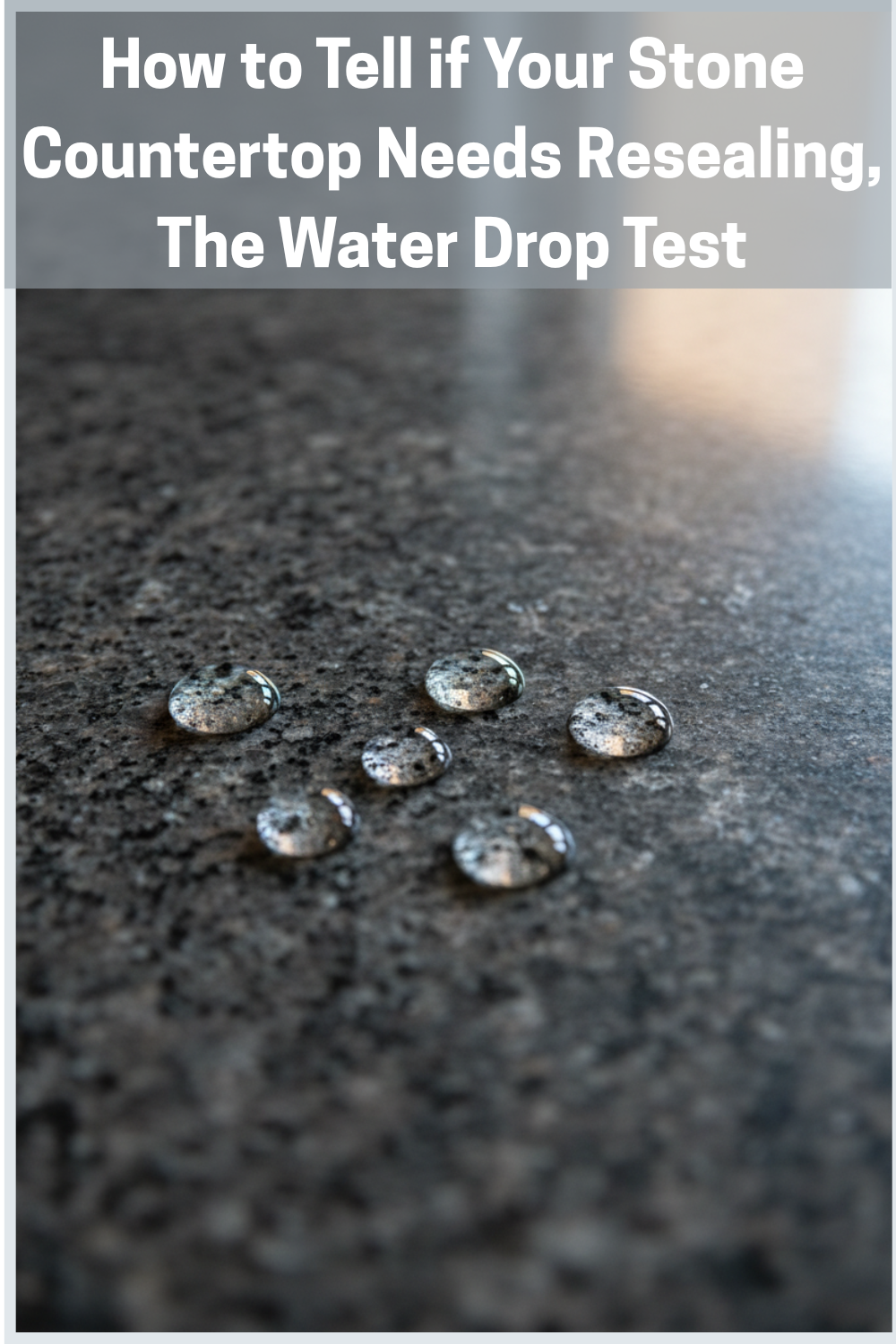
The most reliable test is the water drop test:
- Place a few drops of water on the stone surface in an inconspicuous area
- Wait 10–15 minutes without wiping
- Check the result:
- Water beads up and stays on the surface — sealer is still working; no resealing needed yet
- Water soaks in slowly (darkens the stone slightly) — sealer is wearing thin; reseal soon
- Water absorbs quickly and darkens the stone significantly — sealer has failed; reseal immediately
- Stains are appearing more frequently or more easily
- Water no longer beads on the surface
- The stone looks dull or flat even after cleaning
- You've recently had stains removed with a poultice (the treatment process affects the sealer)
- You've never sealed the stone since installation
- Lustro Italiano Natural Stone Cleaner
- Lustro Italiano Stone Sealer
- Clean soft cloths or paper towels
- Optional: Lustro Italiano Stone Polish & Sealer Spray for finishing
- Sealing over a dirty surface — any residue trapped under the sealer will be sealed in permanently; always clean thoroughly first
- Applying too much sealer — excess sealer left on the surface dries into a hazy film; wipe off all excess before it dries
- Sealing wet stone — moisture in the pores prevents the sealer from penetrating; always allow the stone to dry completely before sealing
- Using the wrong sealer — topical coatings sit on the surface and peel; always use an impregnating sealer that penetrates the stone
- Skipping resealing after stain removal — the poultice process affects the sealer in the treated area; always reseal after any stain or rust removal treatment
- Lustro Italiano Stone Sealer →
- Lustro Italiano Professional Counter Top Reseal Kit →
- Lustro Italiano Stone Polish & Sealer Spray →
- Lustro Italiano Stone Cleaner & Polish Kit →
- Lustro Italiano Natural Stone Cleaner →
You can also test with a drop of cooking oil — if it absorbs within a few minutes, the stone is unsealed or under-sealed.
Other signs your stone needs resealing:
How Often to Reseal Different Stone Types
Resealing frequency depends on the stone's porosity, the sealer used, and how heavily the surface is used:
| Stone Type | Typical Resealing Frequency | Notes |
|---|---|---|
| Granite (polished) | Every 3–5 years | Lower porosity; most resistant to staining |
| Marble | Every 1–3 years | Higher porosity; more vulnerable to staining and etching |
| Travertine | Every 1–2 years | Very porous; requires more frequent sealing |
| Limestone | Every 1–2 years | Highly porous and acid-sensitive |
| Quartzite | Every 2–3 years | Harder than marble but still porous |
These are general guidelines — always use the water drop test to confirm whether resealing is actually needed rather than resealing on a fixed schedule regardless of condition.
Lustro Italiano Sealing Products
Lustro Italiano Stone Sealer
An ultra-premium impregnating sealer for granite, marble, travertine, limestone, and natural stone. Penetrates the stone's micropores to create a deep protective barrier against staining. Does not alter the stone's appearance or texture. Lasts 4–5 years on countertops under normal use. The go-to sealer for full resealing after stain or etch removal, or as a standalone maintenance treatment.
Lustro Italiano Professional Counter Top Reseal Kit
A complete countertop resealing kit that includes everything needed to clean, polish, and reseal granite and marble in approximately 30 minutes. Includes the stone cleaner, polish spray, and stone sealer — the full resealing sequence in one package. The best option for a complete periodic maintenance treatment.
Lustro Italiano Stone Polish & Sealer Spray
A spray-on polish and sealer for between full resealing treatments. Restores shine and replenishes the sealer layer with each application. Use 1–2 times per month to maintain protection and appearance between full reseals. Not a replacement for a full impregnating sealer, but an effective maintenance tool that extends the life of the sealer.
Lustro Italiano Stone Cleaner & Polish Kit
A daily care kit combining the pH-neutral stone cleaner and the polish & sealer spray — for ongoing maintenance between full resealing treatments.
How to Reseal Stone Countertops — Step by Step
What You'll Need
Step 1 — Clean the Surface Thoroughly
Before sealing, the stone must be completely clean and free of residue. Use Lustro Italiano Natural Stone Cleaner to clean the entire surface. Do not use acidic or alkaline cleaners — they can leave residue that interferes with sealer adhesion. Allow the surface to dry completely — at least 30 minutes, longer in humid conditions.
Step 2 — Apply the Stone Sealer
Apply Lustro Italiano Stone Sealer to the dry stone surface using a clean cloth, sponge, or paper towel. Apply in an even, thin layer across the entire surface. Work in sections on large countertops to ensure even coverage.
Step 3 — Allow to Absorb (5 Minutes)
Allow the sealer to absorb into the stone for approximately 5 minutes. You'll notice the stone darkening slightly as the sealer penetrates the pores — this is normal and temporary.
Step 4 — Wipe Off Excess
Before the sealer dries on the surface, wipe off any excess with a clean, dry cloth. Do not allow the sealer to dry on the surface — it will leave a hazy residue that is difficult to remove. Work quickly and thoroughly.
Step 5 — Apply a Second Coat (First-Time Sealing)
If this is the first time the stone has been sealed, or if the stone is very porous (travertine, limestone, marble), apply a second coat after 1 hour using the same process. A second coat ensures the pores are fully saturated.
Step 6 — Allow to Cure
Allow the sealed surface to cure for at least 6 hours before food contact or heavy use. For best results, allow 24 hours before placing items on the surface.
Step 7 — Maintain Between Reseals
Use Lustro Italiano Stone Polish & Sealer Spray 1–2 times per month to maintain shine and replenish the sealer layer between full treatments. This significantly extends the life of the full impregnating sealer.
Common Resealing Mistakes to Avoid
Frequently Asked Questions
Does sealing prevent etching on marble?
No. Etching is a chemical reaction between acid and the calcium carbonate in marble — it happens on the surface, not in the pores. A sealer protects the pores from staining but cannot prevent acid from reacting with the stone surface. For etch mark removal, see our guide: How to Remove Etch Marks from Marble →
How do I know if my stone is already sealed?
Use the water drop test — place a few drops of water on the surface and wait 10–15 minutes. If the water beads up, the stone is sealed. If it absorbs and darkens the stone, the sealer has failed or was never applied.
Can I seal marble myself?
Yes. Sealing marble is a straightforward DIY process using the Lustro Italiano Stone Sealer. The key steps are cleaning thoroughly, applying a thin even coat, wiping off excess before it dries, and allowing adequate cure time.
How long does the sealer last?
The Lustro Italiano Stone Sealer lasts 4–5 years on countertops under normal use. High-traffic areas or surfaces cleaned frequently with harsh products may need resealing sooner. Use the water drop test annually to check.
Do I need to seal granite?
Most granite benefits from sealing, though some very dense granites are naturally resistant to staining. Use the water drop test — if water absorbs within 10–15 minutes, seal it. If it beads indefinitely, sealing may not be necessary.
What's the difference between the Stone Sealer and the Polish & Sealer Spray?
The Stone Sealer is a full impregnating sealer that penetrates the stone's pores and provides 4–5 years of protection. The Stone Polish & Sealer Spray is a maintenance product that restores shine and replenishes the sealer layer between full treatments — it's not a replacement for the full impregnating sealer.
Shop Lustro Italiano Sealing Products
Pro Tool Haus is an authorized distributor of Lustro Italiano stone care products.