
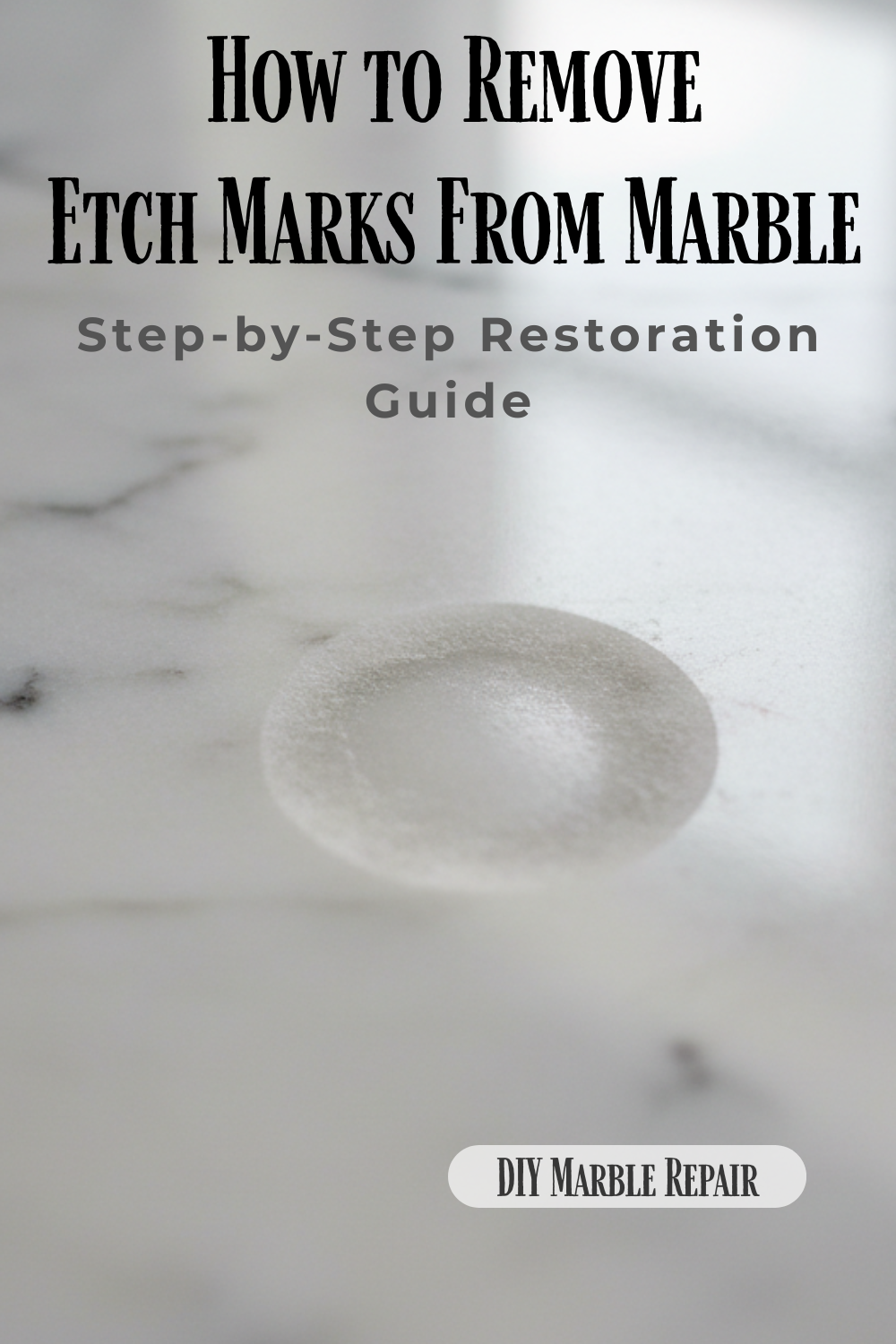
Etch marks are one of the most common — and most misunderstood — problems marble owners face. That dull, hazy ring left by a wine glass or lemon slice isn't a stain. It's physical damage to the polished surface caused by acid reacting with the calcium carbonate in the stone.
The good news: etch marks are fixable. With the right product and technique, you can restore your marble's polish without calling a professional.
This guide covers everything you need to know — how to identify etch marks, what causes them, and exactly how to remove them using Lustro Italiano marble restoration products.
What Is an Etch Mark on Marble?
An etch mark is chemical damage to the polished surface of marble. When an acidic substance contacts marble, limestone, travertine, or onyx, it reacts with the calcium carbonate in the stone and dissolves a microscopic layer of the polished finish.
The result is a dull, hazy, or lighter-colored spot — often ring-shaped — where the surface has lost its polish.
Common causes of marble etching:
- Wine, citrus juice, vinegar, tomato sauce
- Coffee, tea, carbonated beverages
- Cleaning products containing acids (bleach, bathroom cleaners, all-purpose sprays)
- Salad dressing, condiments
- Lemon or lime juice
Important: Sealers do not prevent etching. Etching is a chemical reaction with the stone itself — not absorption into the pores. A sealer protects against staining, but it cannot stop acid from reacting with calcium carbonate on the surface.
Not sure if you have an etch mark or a stain? Read our guide: Etch Mark vs. Stain — How to Tell the Difference and Fix Both →
How to Identify an Etch Mark
Run your finger across the spot. If the surface feels rough, dull, or different in texture compared to the surrounding stone, it's an etch mark. If the surface feels smooth but the color is different, it's more likely a stain.
Etch marks are typically:
- Lighter or hazy in color — the polished surface has been dulled
- Rough or matte in texture where the stone was previously polished
- Ring-shaped or irregular, matching the shape of the substance that caused them
- Visible immediately after contact with an acidic substance
What You Need to Remove Etch Marks from Marble
Etch marks require mechanical re-polishing — you need to physically restore the surface that was dissolved by the acid. Cleaning products, dish soap, or baking soda will not fix an etch mark.
Lustro Italiano makes two purpose-built products for marble etch removal:
Lustro Italiano Etch & Water Mark Remover Powder
A fine polishing powder specifically formulated to remove etch marks and water marks from marble, travertine, and limestone. Ideal for spot treatment on countertops, vanities, and floors. Restores the polished finish without scratching or damaging the surrounding surface.
Lustro Italiano Professional Marble Etch Remover Kit
A complete etch removal and restoration kit that includes the etch remover compound plus a stone sealer to protect the restored surface. The best option when you want to remove the etch mark and reseal the marble in one step.
Lustro Italiano Marble Stain & Etch Remover Kit
Combines stain removal and etch removal in a single kit — the right choice when you're dealing with both problems at once, or when you're not sure which issue you have.
How to Remove Etch Marks from Marble — Step by Step
What You'll Need
- Lustro Italiano Etch & Water Mark Remover Powder
- Clean, soft cloths (microfiber preferred)
- Water
- Optional: low-speed buffer or polishing pad for larger areas
Step 1 — Clean the Surface
Before treating the etch mark, clean the area with a pH-neutral stone cleaner. Use the Lustro Italiano Natural Stone Cleaner and allow the surface to dry completely. Do not use acidic or alkaline cleaners — they can worsen the etch or damage the stone.
Step 2 — Apply the Etch Remover Powder
Dampen the etched area slightly with water. Sprinkle a small amount of Lustro Italiano Etch & Water Mark Remover Powder directly onto the etch mark. You don't need much — a teaspoon-sized amount is enough for most spot repairs.
Step 3 — Polish in Circular Motions
Using a damp, soft cloth, rub the powder into the etch mark using firm, circular motions. Apply consistent pressure and work the entire etch area evenly. You'll notice the powder working as a mild abrasive, mechanically re-polishing the surface.
For larger etch marks or floor areas, use a low-speed buffer with a polishing pad for more even coverage and better results.
Step 4 — Inspect and Repeat if Needed
Wipe the area clean with a damp cloth and inspect the surface. For light etch marks, one application is usually sufficient. For deeper or older etch marks, repeat the process 2–3 times until the polish is fully restored.
Step 5 — Rinse and Dry
Once the etch mark is removed, rinse the area thoroughly with clean water and dry with a soft cloth. Avoid leaving water sitting on the marble surface.
Step 6 — Seal the Surface
After etch removal, apply a stone sealer to protect the restored surface. The Lustro Italiano Professional Marble Etch Remover Kit includes a sealer for this step. Alternatively, use the Lustro Italiano Stone Sealer separately.
While sealing won't prevent future etching, it will protect the marble from staining — which is the other half of marble care.
Etch Mark Removal Tips
- Work on a dry surface — excess water dilutes the polishing compound and reduces effectiveness
- Don't rush — consistent circular pressure over 2–3 minutes produces better results than aggressive scrubbing
- Test in an inconspicuous area first — especially on antique, honed, or unusual marble finishes
- Honed marble — etch marks are less visible on honed (matte) marble but the process is the same; use lighter pressure to avoid creating a polished spot on a honed surface
- Deep or widespread etching — if the etch marks cover a large area or are very deep, professional stone restoration may be needed before DIY re-polishing
Preventing Future Etch Marks on Marble
Etch marks can't be prevented with a sealer, but you can significantly reduce the risk:
- Use coasters under glasses, especially wine, citrus drinks, and coffee
- Wipe up acidic spills immediately — don't let them sit
- Use cutting boards — never cut citrus or acidic foods directly on marble
- Avoid acidic cleaning products; use only pH-neutral stone cleaners like the Lustro Italiano Natural Stone Cleaner
- Use placemats under plates during meals
Frequently Asked Questions
Can I remove etch marks from marble myself?
Yes. Light to moderate etch marks can be removed at home using a marble etch remover powder like the Lustro Italiano Etch & Water Mark Remover Powder. Deep or widespread etching may require professional stone restoration.
Will a sealer prevent etch marks on marble?
No. Sealers protect against staining by blocking the pores of the stone, but etching is a chemical reaction with the stone surface itself — a sealer cannot prevent it. However, sealing your marble after etch removal will protect against future staining.
How long does it take to remove an etch mark?
Most spot etch repairs take 5–15 minutes. Larger areas or deeper etch marks may require multiple applications over 30–60 minutes.
Can etch marks be removed from honed marble?
Yes, but etch marks are less visible on honed (matte) marble because the surface is already non-reflective. The same etch remover powder works — use lighter pressure to avoid creating a polished spot on a honed surface.
What's the difference between an etch mark and a stain on marble?
An etch mark is surface damage — the polished finish has been dissolved by acid, leaving a dull or rough spot. A stain is discoloration from a substance absorbed into the stone's pores. They require different treatments. Read our full guide: Etch Mark vs. Stain — How to Tell the Difference →
Does Lustro Italiano work on travertine and limestone?
Yes. The Lustro Italiano Etch & Water Mark Remover Powder works on marble, travertine, limestone, and other calcium-based stones.
Shop Lustro Italiano Marble Etch Removal Products
- Lustro Italiano Etch & Water Mark Remover Powder →
- Lustro Italiano Professional Marble Etch Remover Kit →
- Lustro Italiano Marble Stain & Etch Remover Kit →
- Lustro Italiano Marble Stain & Etch Remover Restoration Kit →
- Lustro Italiano Stone Sealer →
- Lustro Italiano Natural Stone Cleaner →
Pro Tool Haus is an authorized distributor of Lustro Italiano stone care products.